Foods That Work Like Ozempic? The Honest Evidence
You've seen the headline — some version of it scrolls past every week. "Eat these foods to boost GLP-1 naturally." "The natural Ozempic." It's a tempting promise, and like most tempting promises, it's part true and part overstated. So here's the honest version: what food can genuinely do for your body's own GLP-1, and exactly where food stops and medication begins.
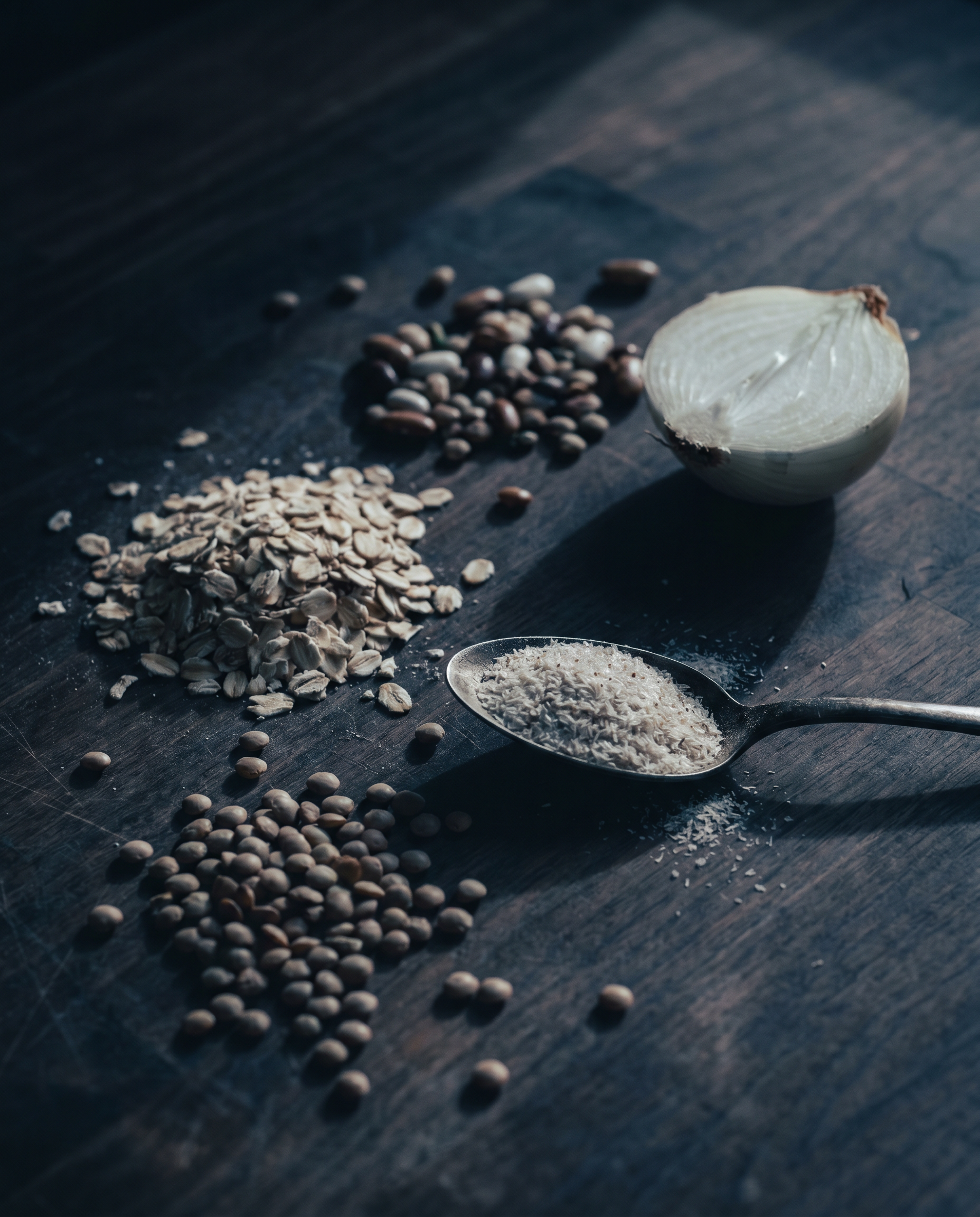
The foods that matter most here are humble ones — and the science behind them is real.
Your body already makes GLP-1
Here's the piece the headlines get right. GLP-1 — glucagon-like peptide-1 — isn't something a pharmaceutical company invented. It's a hormone your own gut makes every day. After you eat, specialized cells in your intestinal lining (called L-cells) release GLP-1 along with a partner hormone, PYY. Together they slow how fast your stomach empties, steady your blood sugar, and send fullness signals up to your brain.
GLP-1 medications like semaglutide are built around this exact system. So the idea that food can influence the same hormone isn't wellness fiction — it's real physiology. The honest question isn't whether food nudges your own GLP-1. It's how much.
The fiber that actually does it
"Eat more fiber" is the usual advice, and it's too vague to be useful — because not all fiber touches this system.
The fiber that drives GLP-1 is the fermentable, viscous kind: the beta-glucan in oats and barley, the inulin in onions, garlic, and legumes, and psyllium. Your own digestive enzymes can't break these down, so they travel intact all the way to your large intestine. That's the whole point — they arrive where your gut bacteria are waiting.
The fiber that doesn't do much here is the plain, non-fermentable kind — the bran-style bulking fiber that mostly adds roughage. It has its own benefits, but stimulating GLP-1 isn't one of them. So the honest headline isn't "eat fiber." It's "eat the kinds of fiber your gut bacteria can actually ferment."
The mechanism, in plain language
Here's what happens after that fiber reaches your colon. Your gut bacteria ferment it and produce short-chain fatty acids — acetate, propionate, and butyrate. These aren't just waste products; they're signaling molecules. They bind to specific receptors on your L-cells and tell them to release GLP-1 and PYY.
That's the chain, start to finish: fermentable fiber → gut bacteria → short-chain fatty acids → your own GLP-1 and PYY → slower digestion, steadier blood sugar, and a gentler sense of fullness. It's an elegant, well-mapped piece of biology. It's also, as we'll see, a modest one.
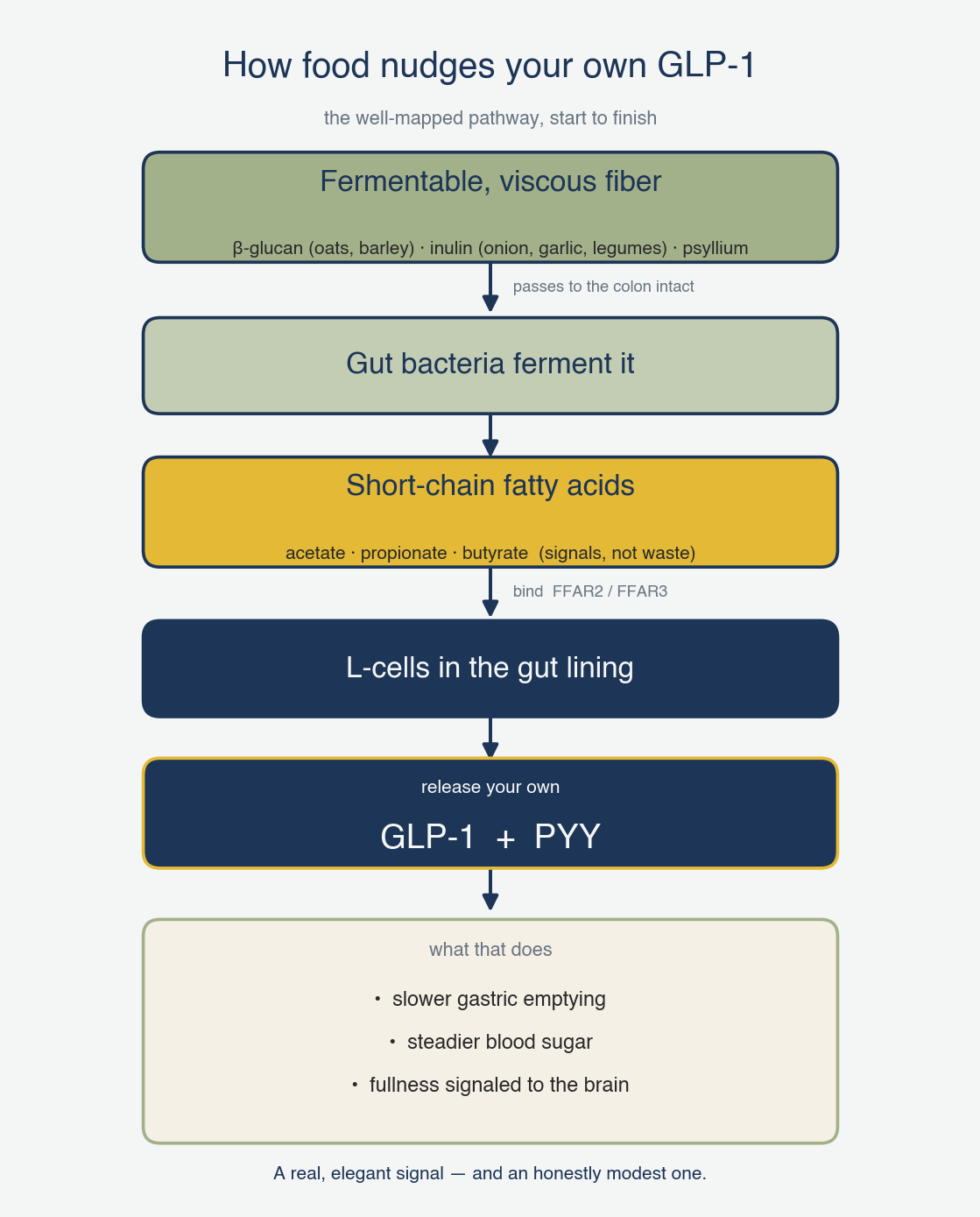
The pathway is well-mapped — your gut talking to your brain, one signal at a time.
Protein pulls the same levers
Fiber isn't the only food that talks to this system. Protein nudges the same family of fullness hormones — GLP-1, PYY, and CCK — through a few different routes, including the amino acids it supplies and the way it signals through the gut-brain connection. The practical upshot is the one most people already feel at the table: protein tends to bring steady, lasting fullness, and it's widely regarded as the most satisfying macronutrient, bite for bite. Building meals around an adequate protein anchor is one of the most reliable, least gimmicky ways to nourish yourself well — so your meals actually hold you between sittings.
Fermented foods: promising, not proven
This is where I want to be especially straight with you, because fermented foods get a lot of breathless coverage. Yogurt, kefir, kimchi, and sauerkraut genuinely support your gut, and the theoretical pathway connecting their microbes to appetite hormones is real.
But the human evidence that eating fermented foods reliably changes appetite or satiety is still limited and inconsistent. The microbes in food often don't take up long-term residence in your gut; much of the strongest mechanistic data comes from isolated supplements or animal studies, not a serving of sauerkraut; and fermented foods aren't standardized, so what's in one jar isn't what's in the next. The honest stance: enjoy fermented foods for the gut support they offer — not as an appetite hack.
Here's where food stops
Now the part the clickbait leaves out, and the most important paragraph on this page.
Your body's own GLP-1 rises only modestly after a meal — a few-fold bump — and then it's broken down within a minute or two by an enzyme called DPP-4. That's by design; it's a quick, gentle signal with its own natural timing. GLP-1 medications are engineered specifically to resist that breakdown, so they hold a far higher level of GLP-1 activity continuously, for days at a time.
That's not a small difference in degree — it's a difference in kind. No combination of oats, lentils, salmon, and kimchi can replicate the sustained, high-magnitude effect of a medication built to bypass your body's own off-switch. Food cannot do what the drug does, and — this matters — it was never supposed to.

The goal was never less hunger — it's more steadiness.
What food genuinely does (and if you're on a GLP-1 med)
So where does that leave whole foods? In a genuinely good place, just an honest one. Fermentable fiber and adequate protein deliver steadier fullness, calmer blood sugar, and real, lasting support for your metabolism and gut health. The goal was never to suppress hunger — it's to bring more steadiness to how you feel between meals. Modest and real beats dramatic and overstated every single time.
And if you're taking a GLP-1 medication, none of this competes with your treatment. These same foods work alongside it — supporting the very system your medication is already engaging, and helping cover the nutrition basics (protein and fiber adequacy) that matter even more while your appetite is lower. Food and medication aren't rivals here. They're on the same side.
How we think about this at Anchor & Apex
The ANCHOR approach isn't "eat this instead of that," and it's definitely not "ditch the meds and fix it with food." It's calmer than that: understand what your body already does, feed it the foods that genuinely support that system, and hold realistic expectations about what changes food can and can't make. That's not a less exciting answer. It's a more honest one — and honest is what actually helps.
About the evidence
The mechanisms described here — enteroendocrine L-cell signaling, short-chain fatty acids and their receptors, DPP-4 degradation of GLP-1, and the satiety effects of protein and viscous fiber — are well established in clinical nutrition and gut-physiology literature, drawn from Anchor & Apex's curated science library. The relative satiety ranking of protein reflects broad clinical consensus rather than a single trial. The contrast between endogenous GLP-1 and GLP-1 receptor-agonist medications reflects established pharmacology. This article is educational and isn't a substitute for individualized medical or nutrition advice.